

Case study
Treeplastic is more than a project: it is a statement of intent.
A project that challenged and inspired us, and one whose story we would like to share.
Treeplastic is an innovative material derived from wood.
It is 100% naturally sourced, durable, and fully biodegradable.
Arbos is a benchmark in sustainable stationery, creating innovative paper products made from recycled paper and environmentally friendly materials.
Driven by a commitment to promoting a truly circular economy, Arbos developed a new bio-based material using lignin, a natural by-product generated during wood processing in the paper manufacturing cycle. This project gave rise to an innovative application for this material.
And that is where our paths crossed.
Wood like you've never seen it before
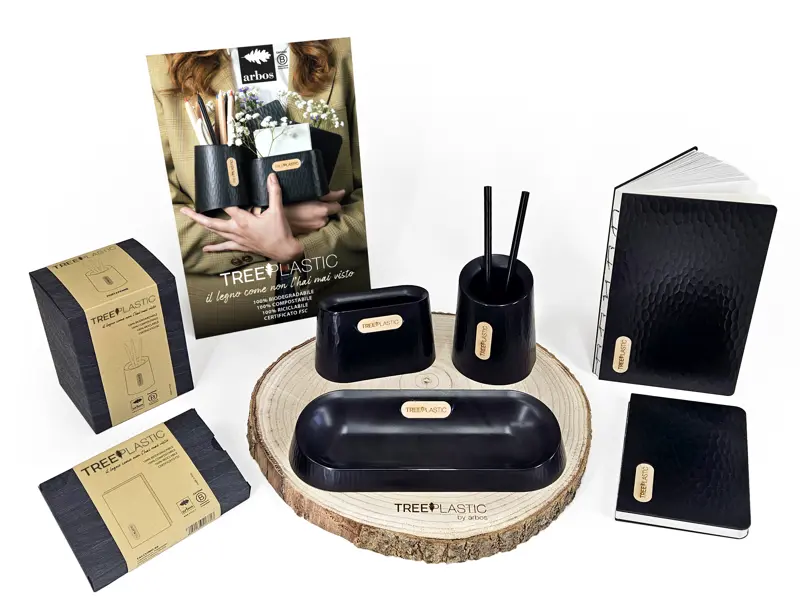
The innovation of this circular economy project lies in the unprecedented use of this bio-material within the world of desk accessories.
The collection includes a small and a large notebook with recycled paper interiors, a memo holder, a catchall tray, and a pen holder.
The project was designed by Valeria Francescato and Alessia Pagotto of Studio Sostanza. The designers focused on a contemporary aesthetic defined by clean geometries and functionality. All storage elements are slightly inclined to make their contents easier to access.
The technical design of the components creates a striking contrast with the organic character chosen for the surface, paying tribute to the origin of the molding material.
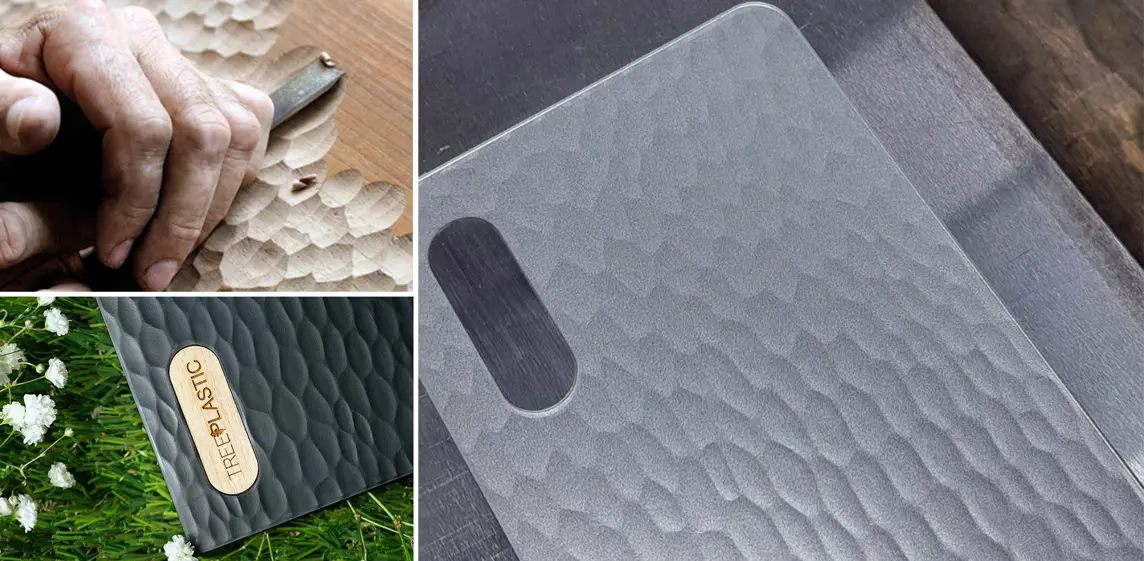
The wood-inspired texture was developed by drawing inspiration from gouge carving, a traditional technique in which a curved-blade carving tool creates grooves, incisions, and organic textures distinguished by a natural and unique appearance.
Finally, a wooden nameplate reinforces the connection with the material while also serving as a customizable detail for names or corporate logos.

Working with the texture designers at ML opened the door
to a freer and more creative approach to texture design.
to a freer and more creative approach to texture design.
V.F., Co-founder of Studio Sostanza

The texture
The texture development process was a truly collaborative dialogue that combined parametric design with DRE® Design. To recreate the natural appearance of handcrafted carving, we worked with gradients, depth variations, and thickness management while also addressing technical challenges related to part ejection.
Together with CTP, the company responsible for mould design and injection moulding, we carried out several tests to determine the ideal texture depth, achieving a realistic appearance while ensuring manufacturability. Once the texture depth had been defined, we laser engraved the moulds for all components.
The Added Value of our DRE® Render
Creating DRE® Renders for each product was instrumental in the development process. It enabled us to bring together the entire supply chain, including Arbos, Studio Sostanza, ML Engraving, and CTP Srl, which managed mould construction and moulding operations.
This created a virtual roundtable where every technical, aesthetic, production, and visual identity requirement could be discussed and resolved before mould production began.
In the ML team, we found not only professionalism and creativity, but also genuine empathy.
They demonstrated the ability to listen, understand our needs,
and work with us openly to achieve our goal.
S.P., General Manager of Arbos
S.P., General Manager of Arbos
Treeplastic: industrializing a bio-based material
The exchange of information between our team, Studio Sostanza, and CTP, facilitated by our DRE® Renders, played a crucial role in preserving the project's aesthetic identity.
In particular, preliminary draft-angle analysis allowed us to develop a texture fully compatible with mold constraints. The texture also contributed to the smooth release of the parts from the cavities, including those featuring the most complex geometries.
The preliminary development phase was equally important in fine-tuning molding parameters and ensuring a stable, repeatable process. Bio-based materials present specific characteristics that differ from traditional polymers, making this project an invaluable opportunity to explore both the potential and the challenges of next-generation materials.
- From a technical standpoint, the material cannot remain in the injection molding machine barrel for extended periods, as it tends to degrade and compromise product quality. CTP therefore optimized injection speed, cooling conditions, and residence times.
- From an aesthetic standpoint, the first tests revealed some surface imperfections. These were successfully addressed by refining the texture design, which ultimately resolved the issue.
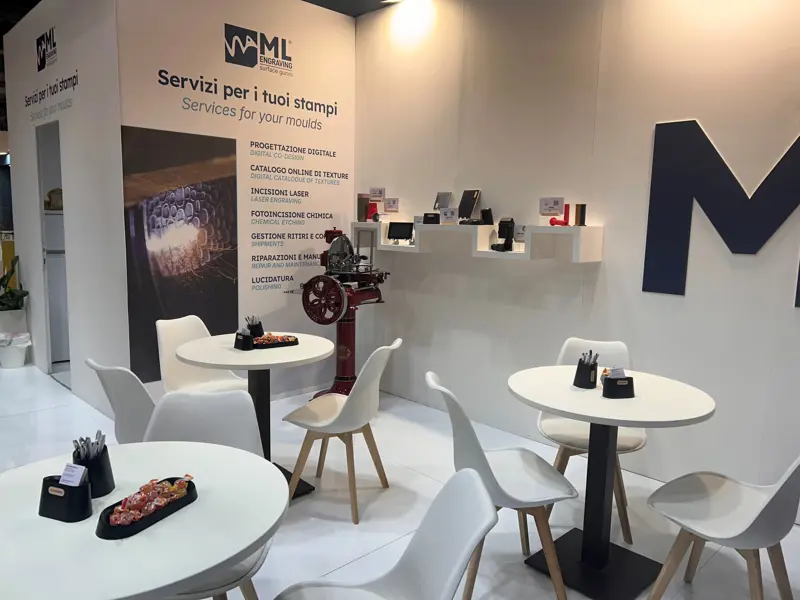
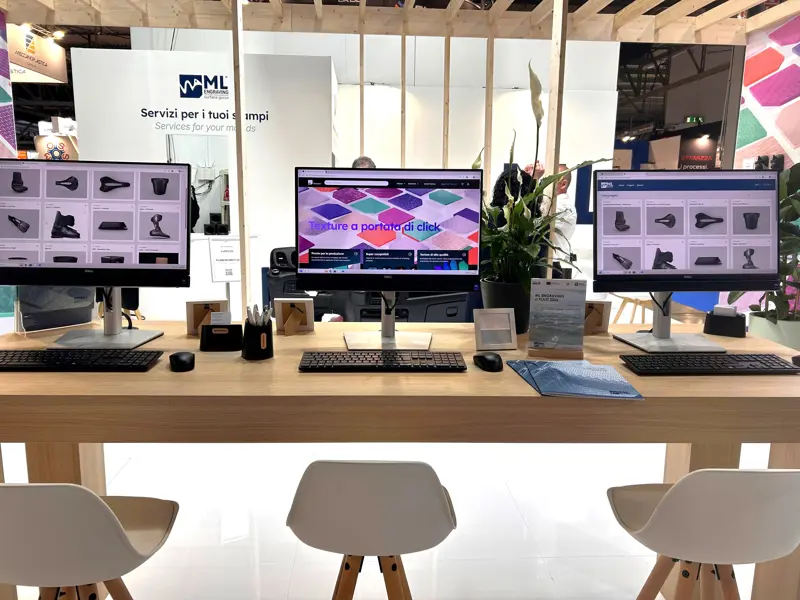
Treeplastic at Our Plast 2026 Stand
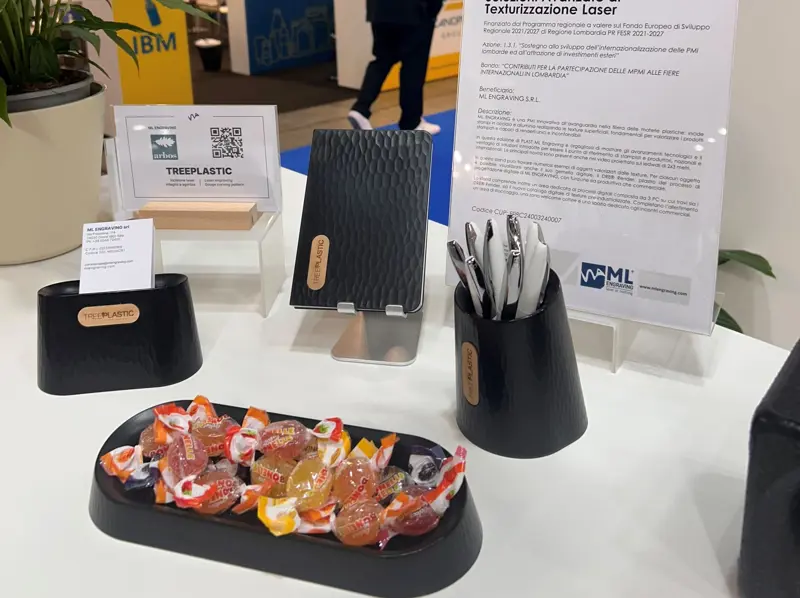
The Treeplastic collection helped bring an additional touch of style to our stand during Plast 2026. It was not simply an exhibit but an integral part of the stand itself.
With just one playful exception: the catchall tray was transformed into a candy holder.
The TREEPLASTIC project was funded by the European Union – Next Generation EU under the Italian National Recovery and Resilience Plan (PNRR), Mission 1, Component 3, Investment 3.3, Sub-Investment 3.3.4: “Promoting innovation and inclusive eco-design, including circular economy practices, and encouraging the public to adopt more environmentally and climate-conscious behaviors” as part of the TOCC (Ecological Transition for Cultural and Creative Organizations) public call under the PNRR framework.